KOMUNITA ĽUDOVÍTOV, n.o.
IDENTIFICATION OF THE CASE STUDY
Case study number: SK-05
Name of the farm/organization: Komunita Ľudovítov, n.o. / The Ľudovites Community, non-profit organisation
Title of the case study:
The problem is not the drug, the problem is the person
MAIN DATA
Country
Slovakia
Year of establishment
1995
Target groups
- Addicts (people addicted to alcohol, drugs or non-substance addictions)
Type of farm
- Non profit organization
- Resocialisation centre
- Farm - vegetable growing, animal breeding
Size (in hectares)
1 ha
Numbers of employees from target groups
0
Number of members from target groups using services without employment
25
Sources they live from
Contribution from the state - allowances for institutions for social protection of children and social guardianship, Share tax 2%, Small donations
Innovative / not innovative
Innovative (they were the first in Slovakia to operate this kind of equipment)
Website
DESCRIPTION
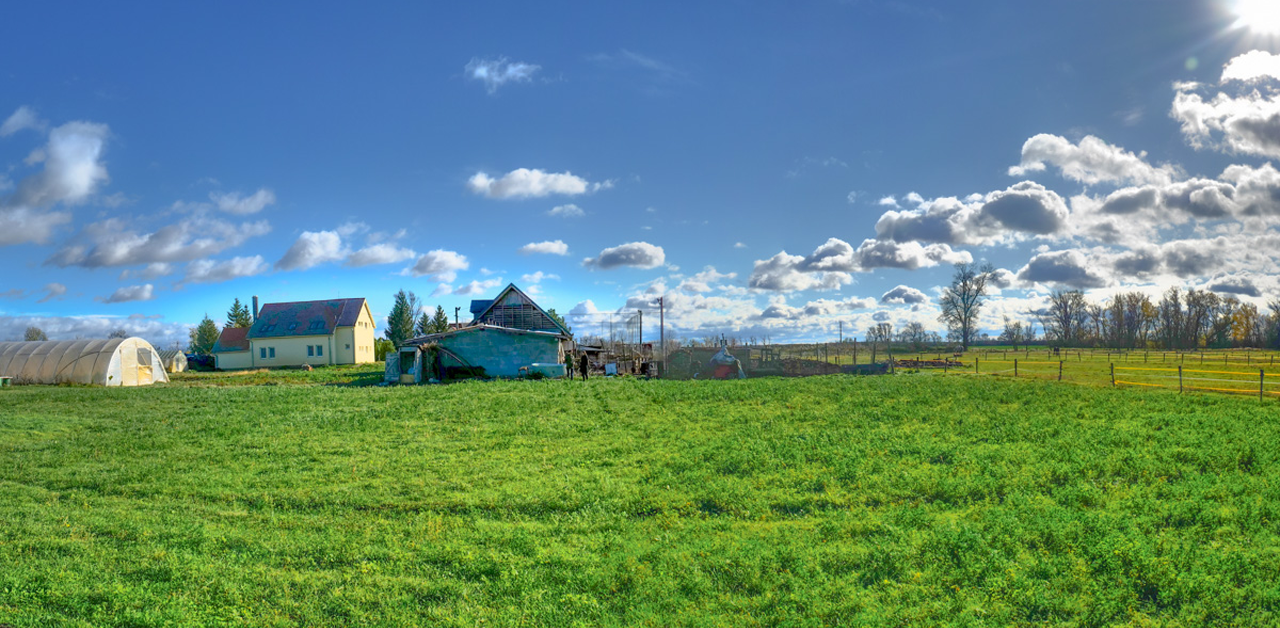
The Ludovites Community, n.o., is a centre for children and family with a resocialisation programme to support the social inclusion of a child or adult person addicted to alcohol, drugs or non-substance addictions in a residential form founded by psychiatrist Mr. Ľubomír Gábriš in 1995 as the first such centre of its kind in Slovakia. This organization currently operates two operations - Poloma - between Zvolen and Krupina in the foothills of the mountains (there are also children under 18 years), and Ľudovítov - near Palárikovo, which we visited for the purpose of this study. The facility is located on an area of about one hectare and consists of buildings for group activities, meals and accommodation, a gym, farm buildings where poultry, pigs, goats, cattle and horses are kept, a playground, a workout area and adjacent gardens which are tended by the clients. The Community's philosophy is self-sufficiency, so through primary production, in addition to using home-grown meat and vegetables without artificial fertilizers, they also process milk products in their cheese factory. The Ludovites Community has a capacity of 25 clients, who ideally should stay for 18 -23 months during which they go through five phases of preparation for a home. As the stay is voluntary, it often happens that clients leave within a few days. As well as using the animals and fostering to help create a working routine for the clients, they also use them for therapy. Apart from regime therapy, individual and group psychotherapy, the Community is especially known for zootherapy (hippotherapy, canistherapy). Mr. Gábriš sees spirituality as an essential component since spirituality is also inserted into the definition of addiction and this component, he believes, can significantly help replace something inside clients after substance withdrawal.
POSITIVE PERSONAL EXPERIENCE
Mr. Gábriš was led to establish this centre when he was the head of the ward and saw how young people needed their regime after detox and that the perspective of a long-term stay for the hospital clients was not there. During his internship he saw that the community system was very important for them and he was also very excited about zootherapy: „these are people who have lost their higher feelings through long term substance use they become lonely and insecure and these animals help in accessing them, we teach them responsibility towards animals. by doing so, they also become more responsible to themselves and their environment.“
The main motivation for Mr. Gábriš is the desire to work with these people and do therapy. It's always something new and interesting, according to him. He is also encouraged to teach the young work team, which also motivates him to leave behind as much experience and knowledge as possible.
He considers the innovation brought by the Ludovites Community in the work with clients to be the linking of manual work with therapy. Guiding clients to the meaning of life - "I learned more from them when I picked up a hoe and dug with them than when they sat in the office with me", he adds.
He considers his greatest achievement that these two facilities exists, function and help people. “We want them to see what healthy products look like. They've been ruining their bodies for years. We had people here who said they never wanted to drink milk in their life and now they want just milk," adds Mr. Gábriš with a laugh.
OBSTACLES AND HOW TO OVERCOME
They consider as the biggest obstacle bureaucracy. Since their work overlaps between healthcare and social work, they often "fall through" the system. While in the West the Ministries of Health and Social Affairs are often linked, in Slovakia they are divided. The problem, according to Mr. Gábriš, is that things are dealt with on a departmental basis and the ministries do not communicate with each other.
The biggest problem in working with clients, they consider motivating clients to stay, to work and to accept the system and regime of the community. "It wouldn't help in my opinion if they were financially motivated and I wouldn't want that. I wouldn't want them to save up during their stay, go out and in a month's time they'd have blown it and prefetched. Rather, teach them frugality, to appreciate that they have a healthy diet," he adds.
In the Ludovites Community there is a significant effort for a healthy way of life - healthy diet, abstinence, detox, fresh air, work, exercise. The challenge for them is therefore to make people from outside understand their work more and give it more importance, but especially those who can guide their target groups to them. "I often get the feeling that those who can send these people to our centre don't understand what we do and they think all we do here is just working from morning to night," says Mr. Gábriš. The problem is also that the kitchen has to comply with the same rules as a municipal restaurant, and keeping animals has the same rules apply as for commercial farms.
RECOMMENDATIONS, ADVICE
As one of the most important things to make things work, Mr. Gábriš considers a good and harmonious team. A team of workers who know how to connect and cooperate. As he says: "We function like a family. Where the family doesn't work, nothing works. When the staff works and performs in unison, they are like parents. Not that one parent has a different opinion than the other and then you can see it in the children and the community."
He would like to encourage other farmers not to be discouraged and to look for ways to get things done. He also thinks it's important for people in the helping professions to realize that they fundamentally affect the lives of others, "and that's the humility. Power is the disease of our time. Everybody wants to have power and control everything, to understand everything. Very little humility is felt. Focus on self-development, self-education. Don't attack, don't judge, don't humiliate. Forget about envy and hostility," he advises. He fears that envy is also a problem among enterprises and can do a lot of harm. That is why he feels it is important to avoid it and to verify unpleasant information before spreading it.
PROMO
They do not currently use any forms of sales, so they do not need to advertise the farm in a big way. They communicate with the public about the farm through interviews they are approached to give, through the website or through lectures that Mr. Gábriš gives around Slovakia.
FINAL SENTENCES
"My vision is to be able to cover the costs of breeding by breeding," says Mr. Gábriš and therefore in the horizon of five years they plan to start selling from the yard. Furthermore, they would like to expand the already functioning bee hives, and they are thinking about building an api house. They would like to rebuild the breeding facility, to fully start hippotherapy and zootherapy. They are also considering creating a Halfway House through a social enterprise, which would have a section of the garden set aside where they would grow and breed.
As for the future development of social farming: "I would expect understanding from people who can influence it positively not to take it that it is only our activity but it is the activity of the whole and the people we care for. That's my wish - an understanding of what we want to do," he adds.
Mr. Gábriš is most proud when he and his clients are successful and "when they understand the importance of why they are here - what we have animals for and why we are growing vegetables."

 EN
EN
 CS
CS
 DE
DE
 IT
IT
 PL
PL
 SK
SK