Svobodný statek na Soutoku
IDENTIFICATION OF THE CASE STUDY
Case study number: CZ-05
Name of the farm/organization:
Svobodný statek na Soutoku / The Free Farm at the Confluence
Title of the case study:
Camphill in Czech
MAIN DATA
Country
Czech Republic
Year of establishment
2012
Target groups
- Homeless people
- People with addiction
- People with disabilities
- Old people
- Other: we work with those who come, but therapeutically it focuses mainly on people with special needs, plus the socially disadvantaged part of the population.
Type of farm
General company, vegetable farming, sales mainly as KPZ, biodynamic agriculture
Size (in hectares)
11 ha, economic turnover from 7 ha
Numbers of employees from target groups
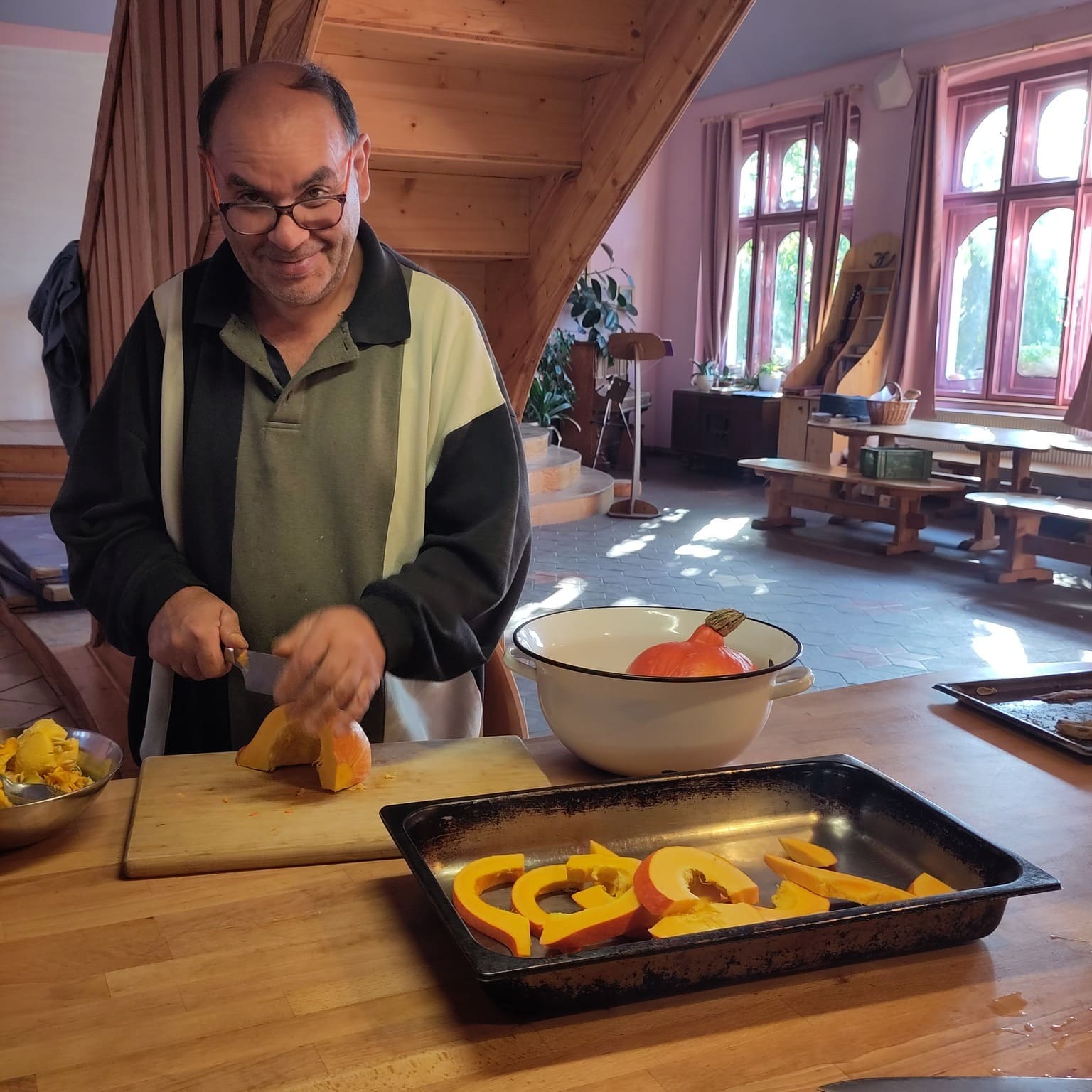
People with special needs are employed on three part-time jobs, two-thirds of people on the farm are socially disadvantaged.
Number of members from target groups using services without employment
The goal of the farm is not primarly to employ but rather to develop community and create meaningful activity for people. The size of the community - a broad term - there are 15 people living on the site, but the people we conceive of and they conceive of us - that's significantly more and it changes frequently.
Sources they live from
90% from own production, 5% from subsidies (e.g. subsidies for development projects)
Innovative / not innovative
„We feel very innovative, we just don't know if the European Union would perceive our innovations positively :).“
Websites:
www.svobodny-statek.cz/bio-dynamicke-zemedelstvi
www.2343ec78a04c6ea9d80806345d31fd78-gdprlock/svobodnystateknasoutoku
DESCRIPTION
Svobodný statek na Soutoku (in translation The Free Farm at the Confluence) builds on the experience of the Camphill Community, a community philosophy, originally from the German founders, where people, including those with special needs, live and work together. Svobodný statek, one of the first social farms in the country, was founded in 2012, working here mostly socially disadvantaged people.
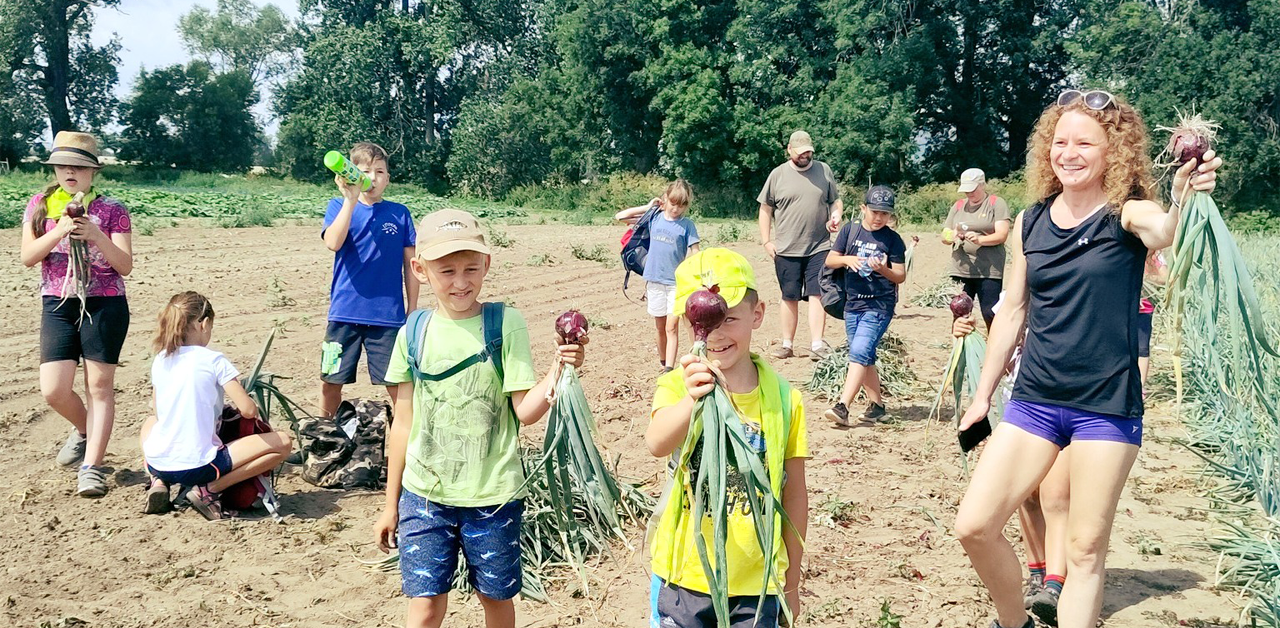
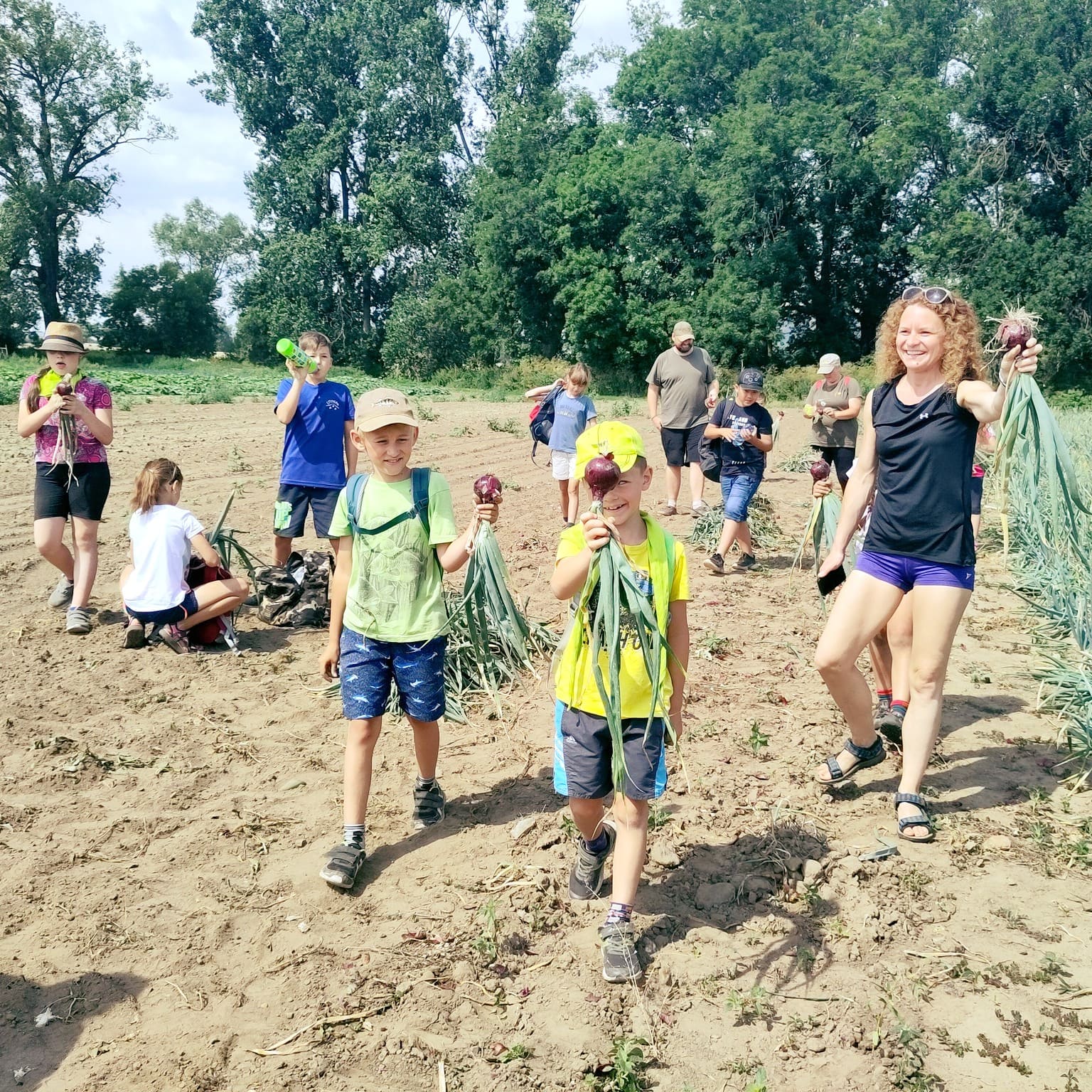
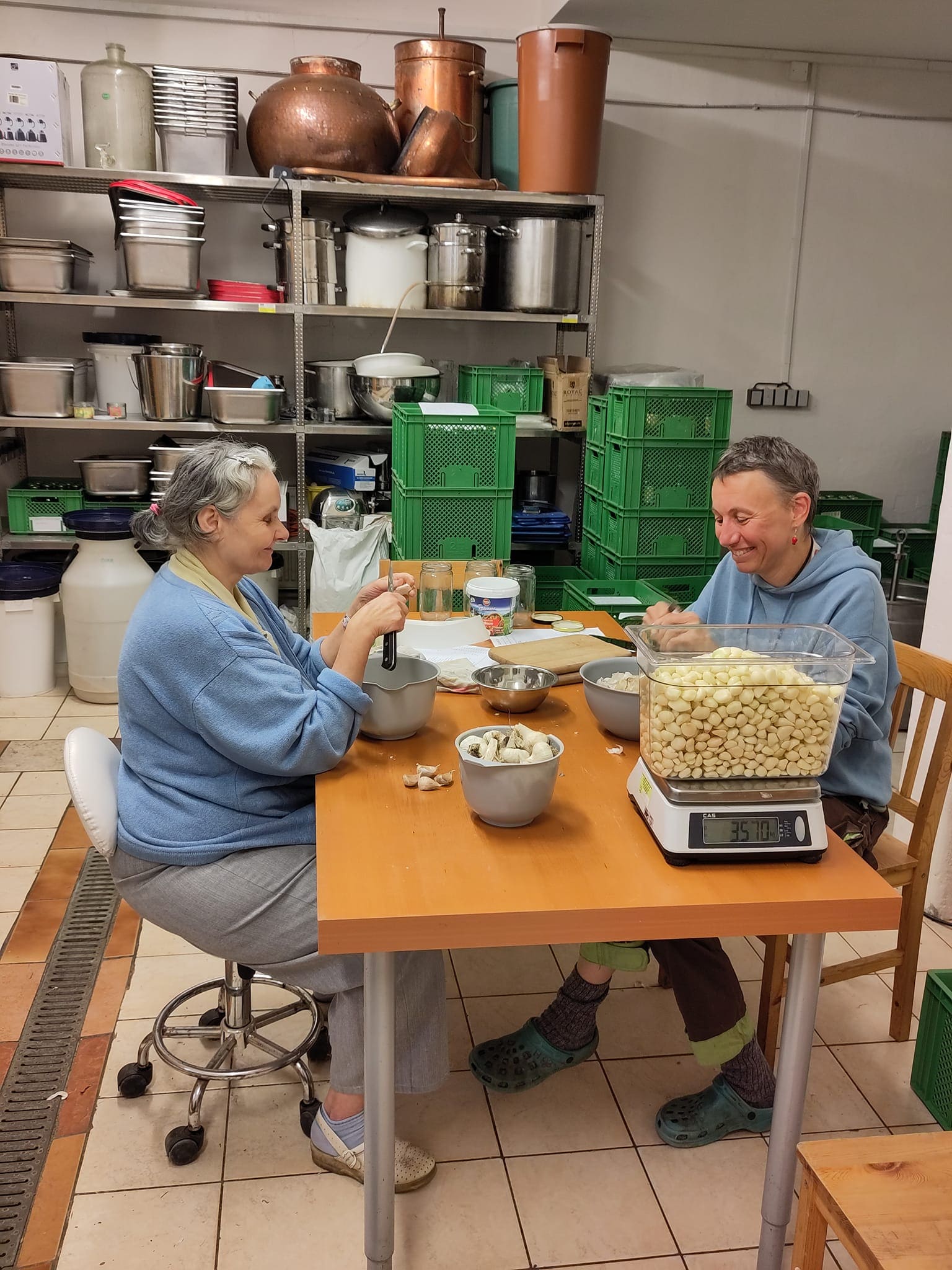
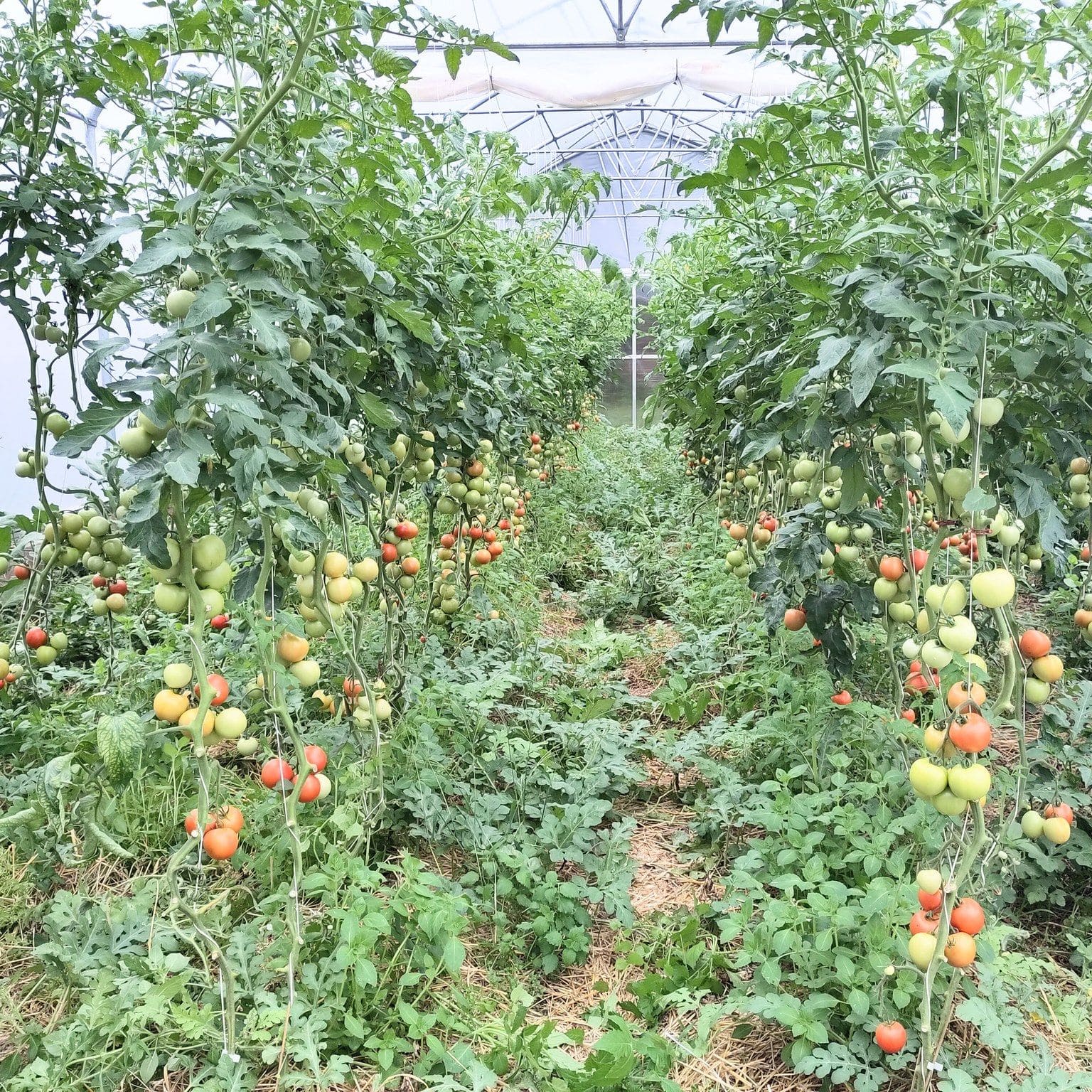
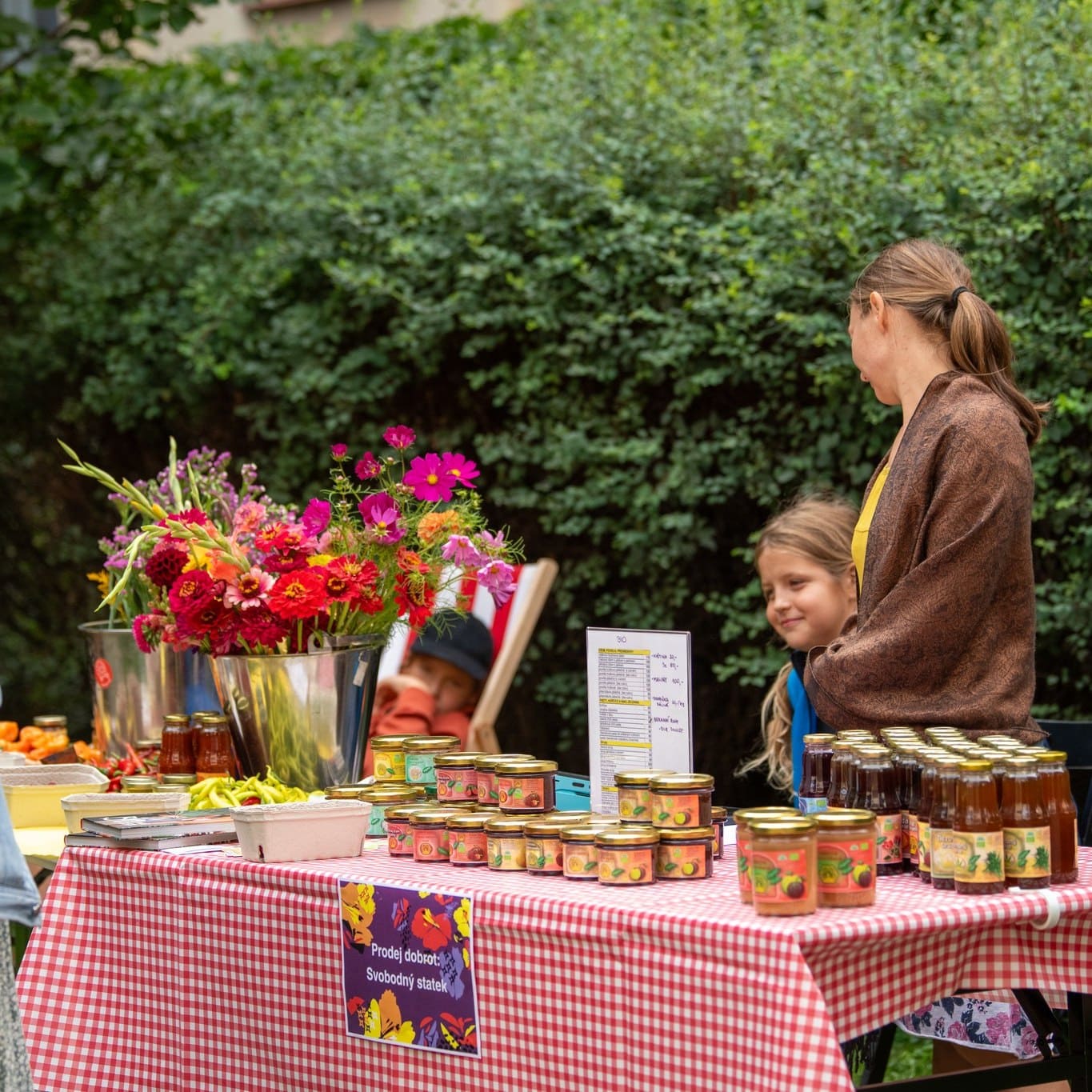
The premises of the farm include an agricultural area, colorful and varied, its plants often resembling a garden rather than a field. Vegetables and herbs are mainly grown, all certified organic and partly Demeter. An interesting feature is also its own processing plant, quite large by Czech standards, not only for vegetables. The complex includes residential buildings, community buildings, all harmonized into an almost idyllic unit. The shop covers a wide network, the products of the Svobodný Statek can be found from the e-shop to health food stores.
There are employed mainly people from the surrounding areas. However, the important role of the farm is mainly in creating a community, helping each other, spreading awareness and belonging, as well as helping other social farm founders. There is an important moral overlap in caring for plants and the landscape, spreading compassion and solidarity with the Earth.
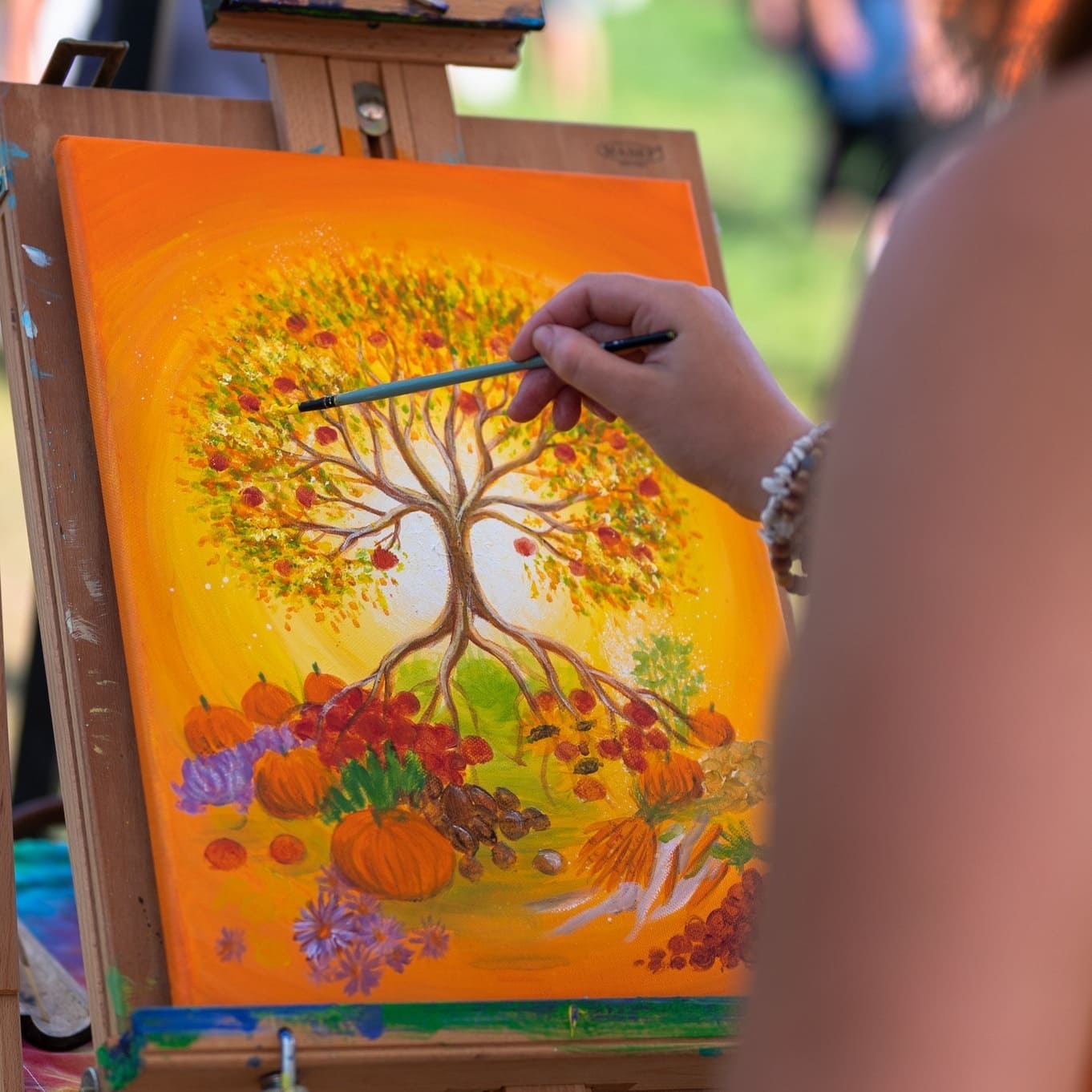
The interviewed founder is Jaroslav Lenhart, who was at the very beginning and lives in the place with his family. In addition to caring for the plants, he is dedicated to spreading the mission of the organization. He is a strong community builder and is increasingly developing the artistic side of his personality, which is evident in his work and the entire farm.
POSITIVE PERSONAL EXPERIENCE
Svobodný statek na Soutoku has been operating for over ten years. The motivation for the founders after all years is still ongoing. Jaroslav said: "I appreciate every step we've taken. Even though I tend to get upset, it's been a good school for me. What we're doing has given me the opportunity to look in the mirror and see who I really am. We are all people with some kind of disability.”
Jaroslav considers it a success that the farm serves as a role model – when somebody wants to point to a place that works, not just in farming practice, it's often Svobodný statek. Even though without being completely clear on how it works. The founder sees innovation as going back to nature and finding technologies that are close to and based on nature. This approach sees as not very common at the moment. The founder often speaks out publicly, also about things that need to be changed in the system even though only a few people want to hear about these needed changes.
They see the fields as their sanctuary: "Our fields, the farm, the whole agricultural mechanism is still growing, becoming more and more beautiful. The farm has a moral and cultural overlap, it is a place of creation. And we end up with better and better numbers at the end of the year, even though sometimes we don't know why it is so.
OBSTACLES AND HOW TO OVERCOME
The challenge is the sustainability of the business. As Jaroslav mentions there are fewer and fewer people who want to have a dialogue in this direction. There is a mismatch in the economy, agriculture is very low valued. The price is derived from big business, which does not reflect the value that plants have if they are grown according to the principles that Statek holds. They are often compared to other farms that operate as large-scale farms, where care is lacking. They don't grow plants for an unsustainable business. But still, there are a few partners left, and there are plenty of end customers who appreciate their approach.
Due to the focus on sustainability and plant care, it is then more difficult to quantify the financial reward that the farm can offer to its employees, especially compared to other jobs: "I can't set the price, and that's a very critical moment. You can't calculate it from costs and use this simple formula."
The team is partly made up of a specific community that lives in sheltered housing, but some of them have a lack of motivation to work. They are partially retired, have their basic needs provided for and it does not make much sense for them to go to work.
The biggest challenge every year is the growing season. All the activity is spread out over the year, but the biggest amount of work is done between May and September. Next, it is economic sustainability which is important for taking good care of the plants and functioning as a community.
RECOMMENDATIONS, ADVICE
The social enterprise status, which they have had since the beginning, helped the farm to get off to a financial start. They were not directly dependent on money from cultivation, but had financial support from the state.
But it is hard to say if it is possible to replicate the experience of Svobodný Statek to other companies, especially when it comes to business, where there are many factors. The recommendation would be to grab opportunities sometimes bite the bullet and sometimes to rethink some of their own principles regarding business negotiations and sales. As Jaroslav says: 'I am learning to be humble and enthusiastic in such negotiations, even though I know it will not be easy. It is also important to try to eliminate the motives of pressure, to be aware of personal limits and possibilities".
Farming must be a matter of the heart. “It's important to forget about holidays. Work should bring enough energy so that you don't need a holiday. You should not be afraid to realize your own limits, but also to go beyond them in peace.” You can tell that Jaroslav is doing what brings (him) joy: " It helps to connect with the living beauty and value of what I do, and to have that in the first place, no matter what it costs me or what I don't like. We're getting more and more excited about working with the plants themselves, it's good to have that. So that the time spent in the place where you're growing is meaningful and fulfilling.
PROMO
The farm is one of the best-known farms whose products can be found in the regular shopping network. This is part of the strategy, to target all possible sales channels, from e-shop to short sales chains, from wholesale networks to yard sales. The farm works with other farmers, supplying end customers with boxes (CSA, community-supported agriculture), selling through resellers, supplying schools and nurseries. Some channels are unprofitable, but as the whole, it works.
They would be able to achieve greater efficiencies, perhaps at the expense of the diversity of crops grown, but they don't see that as their way. They have been using Facebook for a long time, more recently Instagram and also upgraded their mailing platform. They have contacts among journalists who visit the farm regularly, which results in about ten stories a year in the mainstream media. They comment on professional matters on dedicated platforms.
FINAL SENTENCES
The next ten years are anticipated to be progressive. Within five years, they would like to get into a model of operation that will be interesting for younger people, teenagers and twenty-somethings and so on, because they need support. And Statek needs new blood in its veins. In Jaroslav's words, "We would like them to know that we are here for them and that we are behind them, that we are preparing new paths and platforms".
They are duly proud of what the farm has become in ten years. Of what they have been through and how they have become big in their smallness. For many souls, they are the guiding light of underground farming practices and morals. They were nominated for Entrepreneur of the Year, but then the organizers were put off by the fact that the turnover was not that great and also that their progress was not tangible and countable enough. Which isn't bad for a benefit-format nonprofit anyway.

 EN
EN
 CS
CS
 DE
DE
 IT
IT
 PL
PL
 SK
SK